


Getting Temperature Right in the Fab
If you’re trying to build a “smart” fab, you’ll quickly realize that automation isn’t the hard part. The real struggle is the data. You need a loop that actually talks back to you in real-time. In our semiconductor heating setups, we stop guessing and start measuring by pairing high-density infrared (IR) systems with precision thermocouples. It’s the only way to move away from those tedious manual checks and actually digitize the line.
Why we lean on IR
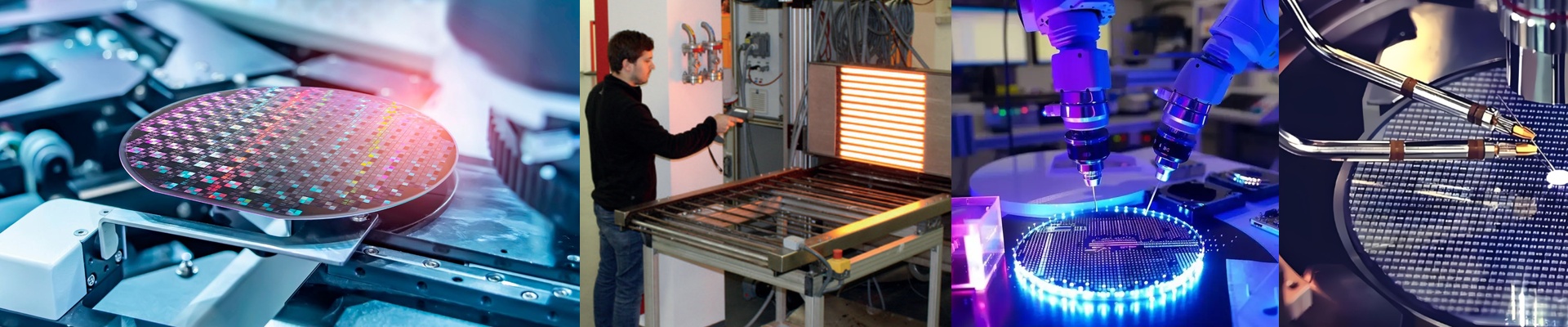
IR systems are great because they don’t have to touch anything to tell you what’s going on. They’re instant. Traditional heaters are slow—they rely on conduction, which takes forever. IR just hits the wafer surface and gives you the answer immediately. We bake these into the Fab layout to make sure the heat is spread evenly across the whole substrate. Because if you get a hot spot? You’ve just trashed a whole batch of wafers.That’s a nightmare nobody wants.
The grit of thermocouples
Now, IR gives you the big picture, but thermocouples give you the “ground truth.” They tell you exactly what’s happening at a specific point of contact. The trick here is the spec. You need sensors with low thermal mass. If your thermocouple is too chunky, it lags. And when the sensor lags, your PID controller overshoots the target temperature. It’s a frustrating cycle that ruins your precision.
Making it digital (and the headaches that come with it)
To get this into a monitoring system, we run everything through digital converters. This basically gives us a digital twin of the heating process. It feels like magic when it works. But here’s the thing: high-frequency sampling is a magnet for electrical noise. If you’re lazy with your wiring and run thermocouple leads right next to high-voltage IR power lines, your data will be full of spikes. It’s messy. You have to use shielded cabling and get your grounding perfect to keep the signal clean. Otherwise, your fancy “smart” factory is basically just guessing.