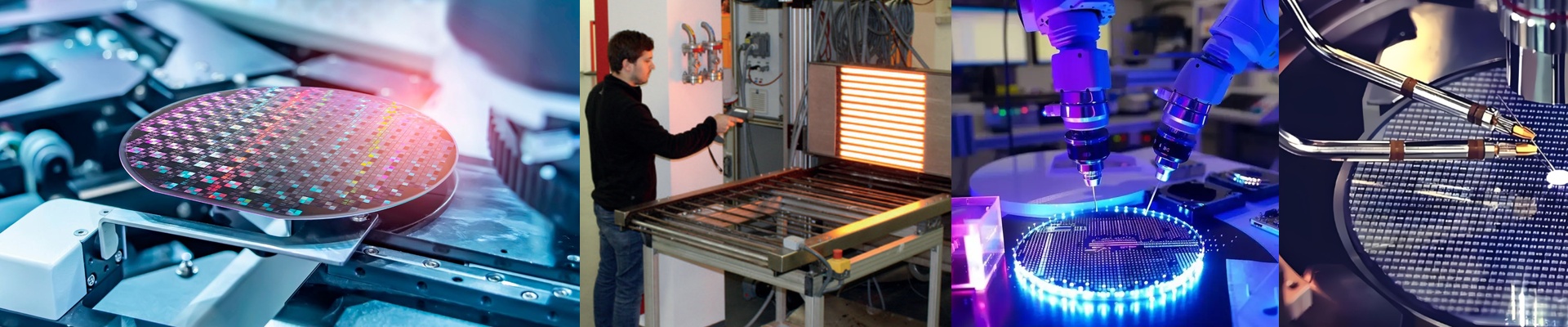




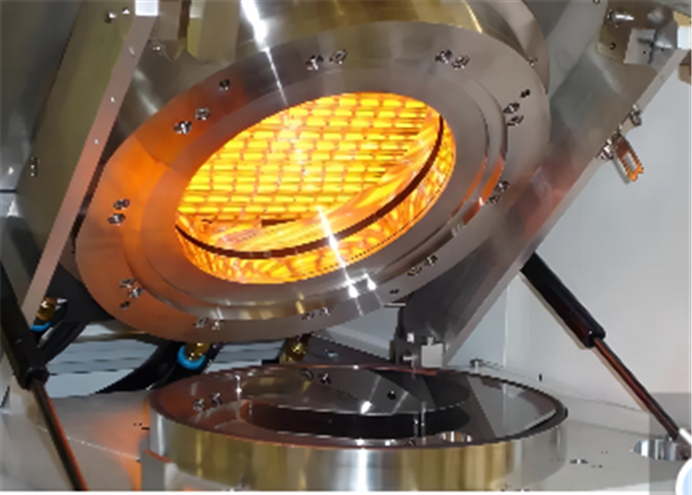
On the fab floor, that 95°C soft bake on the photoresist isn’t a suggestion—it’s the thermal budget, plain and simple. Miss it by half a degree and your line width control starts to drift. Yield follows. That’s why the heater element in your coater/track or bake oven has to deliver repeatable heat, shift after shift, no excuses. What matters under the hood We build the semiconductor processing heater element for lithography-grade thermal control. Depending on the chamber, we spec short-wave halogen quartz emitters or medium-wave carbon-fiber-reinforced heaters, matched to your geometry and power profile. Across a 300 mm wafer, you get uniformity within ±0.1°C, fast ramp rates, and setpoints that stay stable under 24/7 duty cycles. It’s cleanroom-compatible for Class 1–100, with zero particle generation, low outgassing, and corrosion-resistant materials. Repeatability is measured, not talked up—sustained stability under load, with documented thermal drift and lifetime curves. Why it holds up in production This element drops in as a verified, equivalent alternative to OEM heaters and aligns with international semiconductor equipment standards. In photoresist processing—soft bake, hard bake, and post-apply bake—temperature precision directly sets critical dimension (CD) performance and defect density. Tight uniformity keeps thermal stress down, improves film thickness control, and tightens the process window. The payoff is consistent lots, fewer reworks, less scrap, and PM intervals you can plan around. Energy use is optimized through efficient radiant coupling and low thermal mass, so you cut heat load on the cleanroom without giving up performance. Here is what to watch on install Installation is straightforward on standard tool interfaces, but thermal contact and alignment are sensitive. Verify mounting tolerances, emissivity matching, and sensor calibration if you want to keep that ±0.1°C uniformity. Output is configurable by voltage and watt density—match the spec to your tool’s thermal load and cooling capacity. On high-throughput lines, plan for periodic inspection. Even with proven reliability, thermal cycling adds up. Treat it like any process variable: control it, measure it, and it will keep your lithography running to spec.