



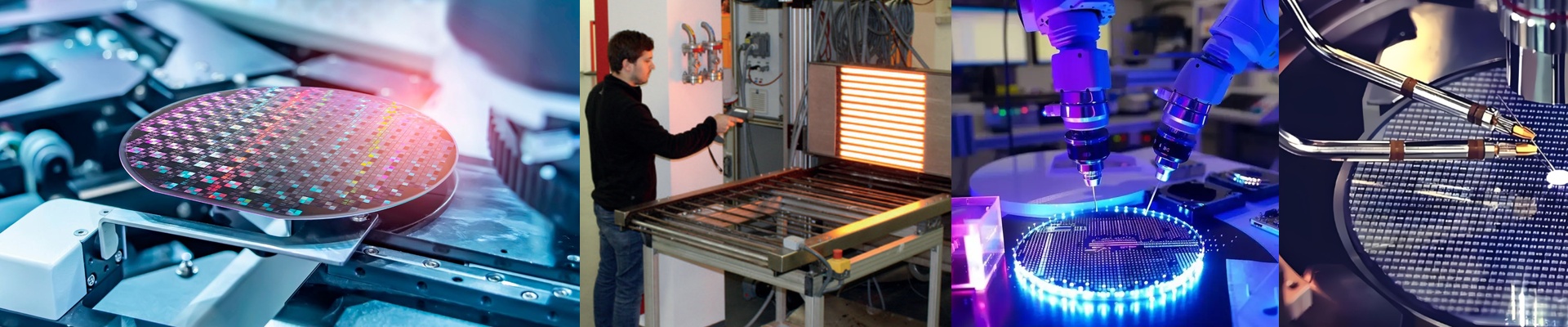
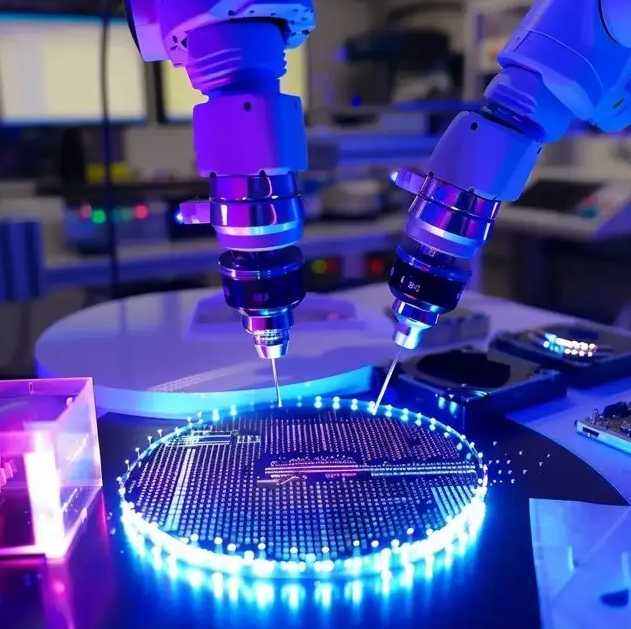
On the fab floor, a 0.1°C drift during the photoresist bake can shift a linewidth by nanometers—and wipe out hours of lithography work. In high-volume wafer manufacturing, thermal repeatability isn’t a “nice-to-have.” It is the process. We designed our ultra-precision thermal systems to keep every soft bake and hard bake inside the thermal budget, day after day, across Class 1–100 cleanrooms. Here’s what matters under the hood. Our halogen-free heating modules hold ±0.1°C steady-state uniformity across the wafer, and that setpoint stability holds up under 24/7 duty cycles. NIR short-wave response gives you sub-second ramp control, cutting thermal lag and protecting thin-film integrity. Cleanroom-compatible materials and zero particle generation keep contamination counts down, and the system meets SEMI safety and EHS requirements. Energy draw is tuned to the process window, not peak demand, so you run more bakes per kilowatt-hour without sacrificing temperature accuracy. In lithography, photoresist processing is where yield is won or lost. We keep soft bake solvent removal consistent and hard bake adhesion repeatable, so critical dimension control stays in spec. The payoff: fewer rework lots, tighter CD distribution, and cycle times you can plan around. For packaging lines, that same thermal stability translates to reliable curing and bond integrity—fewer scrap wafers and fewer unplanned stops. Global supply chain integration means the system drops into existing fab infrastructure, fitting major equipment footprints and interfaces. A few practical notes before you sign off. High accuracy means disciplined installation. Plan for cleanroom-rated power, grounding, and exhaust, and make sure your recipe’s ramp rates are within the controller’s tuning limits. The platform is built for continuous operation, but you’ll need routine calibration every 5,000+ hours to keep that ±0.1°C performance.Match the heater to the chamber geometry—mismatched thermal masses will eat into uniformity.